
Where does water intrusion start in the exterior building envelope?
Water intrusion most commonly begins at transition points in the exterior envelope, where different building materials meet or penetrate the wall system.
The most common exterior envelope leak points include:
- Window and door perimeters
- Roof-to-wall intersections
- Material transition joints (brick to siding, stucco to metal, etc.)
- Exterior penetrations (pipes, conduit, vents)
- Flashing seams and edges
These areas experience constant movement between building materials, making them more vulnerable to sealant failure and moisture entry.
Using flexible exterior sealants with strong multi-substrate adhesion helps maintain a watertight seal and protect the exterior building envelope from water intrusion.
When it comes to protecting a building from the elements, most people focus on exterior components such as roofing systems, siding, and windows.
But in reality, water intrusion rarely begins on large surfaces.
Instead, leaks typically start at transition points within the exterior building envelope—the joints where different materials meet, systems intersect, or penetrations occur.
These areas experience constant stress from thermal movement, material expansion, weather exposure, and structural settling. Without the right sealant in place, even small gaps can allow water to enter the structure, eventually leading to moisture damage, mold growth, and costly repairs.
Understanding where these vulnerabilities occur—and choosing the right sealants to protect them—is critical to maintaining the integrity of the exterior envelope.
Key Takeaways:
- The exterior building envelope protects buildings from air and moisture intrusion.
- Most leaks begin at transition points between materials, not large surfaces.
- Common failure areas include windows, roof-to-wall intersections, material changes, and penetrations.
- High-performance sealants are essential for maintaining airtight and watertight envelope continuity.
What Is the Exterior Building Envelope?
The exterior building envelope (sometimes called the exterior envelope) is the physical barrier that separates a building’s interior from the outdoor environment and protects it from weather, moisture, and air infiltration.
It includes exterior components that work together to control air movement, water intrusion, and temperature transfer.
These components typically include:
- Roofing systems
- Exterior wall assemblies
- Windows and doors
- Flashing systems
- Insulation and weather barriers
- Sealants and joint materials
When properly designed and installed, the exterior envelope helps:
- Prevent water intrusion
- Reduce air leakage
- Improve energy efficiency
- Protect structural components from weather damage
Sealants play a critical role in this system by sealing joints, seams, and transitions where other materials cannot form a continuous barrier.
Exterior Envelope vs. Building Envelope: Are They the Same Thing?
The terms exterior envelope and building envelope are often used interchangeably in construction, but they can refer to slightly different aspects of a building’s protective system.
The building envelope includes all elements that separate interior conditioned spaces from the outside environment. This can include foundations, walls, roofs, windows, insulation systems, and air barriers.
The exterior building envelope, on the other hand, typically refers specifically to the outermost layer of protection that prevents water and air infiltration.
In both cases, sealants are essential because they maintain continuity between different building systems and materials. Without proper sealing at transitions and penetrations, even well-designed envelope systems can experience water intrusion.
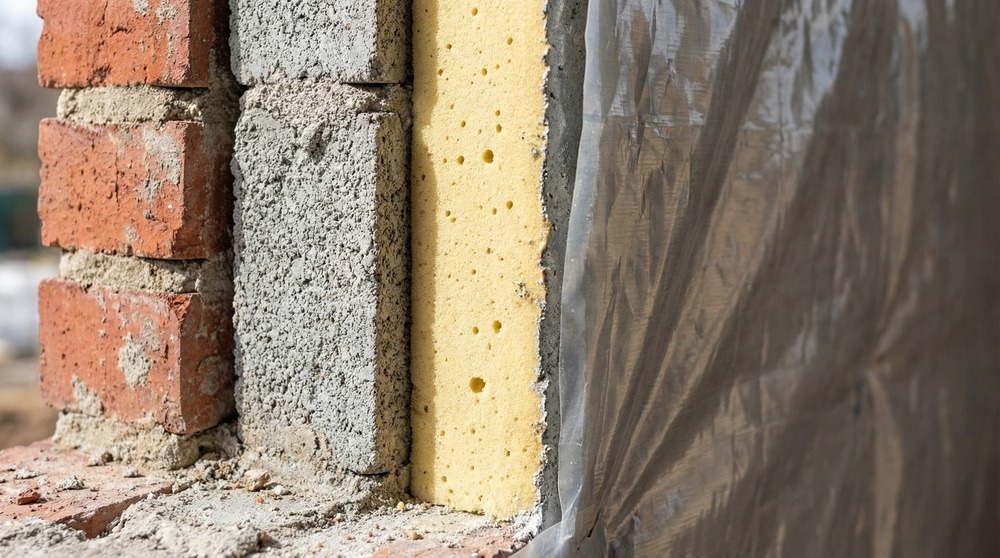
Where Does Water Intrusion Start in the Exterior Envelope?
Water intrusion rarely begins on large exterior surfaces, such as siding or roofing panels.
Instead, it most often occurs at exterior envelope transitions, where different materials meet or where penetrations interrupt the wall system.
Below are some of the most common failure points in the exterior building envelope.
|
Exterior Envelope Transition |
Why It’s Vulnerable |
Potential Result |
|
Window and door perimeters |
Multiple materials meet and expand at different rates |
Water intrusion around frames |
|
Roof-to-wall intersections |
High water exposure and flashing transitions |
Leaks entering wall assemblies |
|
Material changes (siding to brick, stucco to metal) |
Different expansion rates and adhesion challenges |
Cracked sealant joints |
|
Exterior penetrations (pipes, vents, conduit) |
Small gaps and irregular shapes |
Water entering through wall penetrations |
|
Flashing seams and edges |
Sealant deterioration over time |
Moisture infiltration behind cladding |
Each of these locations requires properly selected sealants that can maintain long-term adhesion and flexibility under exterior conditions.
1. Window and Door Perimeters
Window and door openings are among the most complex joints in the exterior building envelope.
These areas often involve several different materials, including:
- Glass
- Aluminum
- Wood or vinyl frames
- Exterior siding
- Masonry or stucco
Each material expands and contracts at different rates when temperatures change. Over time, this movement can cause sealants to crack, shrink, or lose adhesion if the wrong product is used.
Without a durable sealant, even small gaps can allow water to enter the wall assembly around the window or door frame.
To maintain a watertight seal, exterior sealants should offer:
- Strong adhesion to multiple substrates
- High flexibility for joint movement
- Resistance to UV exposure and weather
2. Roof-to-Wall Intersections
Roof-to-wall intersections are another major source of water intrusion in the exterior envelope.
These transitions experience high water exposure during rain events, as water naturally flows toward them.
Flashing systems are designed to direct water away from these areas, but sealants are still required to close gaps and maintain continuity between materials.
Common failure points include:
- Unsealed flashing edges
- Sealant deterioration over time
- Movement between roofing materials and wall systems
Sealants used in these areas must provide long-term adhesion and flexibility, especially when bonding to materials like metal flashing, masonry, and roofing substrates.
3. Material Transition Points
Modern buildings often use multiple exterior materials within the same wall system. For example, a structure may incorporate:
- Brick veneer
- Fiber cement siding
- Metal panels
- Stucco
- Composite materials
Where these materials meet, differences in movement become a major challenge. Each material expands and contracts at different rates due to temperature changes and moisture exposure.
If the sealant cannot accommodate this movement, joints may crack or pull away from the surface, creating an opening for water intrusion.
Sealants designed for these transitions should provide:
- Multi-material adhesion
- High movement capability
- Durable elasticity over time
4. Exterior Penetrations
Every penetration through the exterior building envelope represents a potential leak path.
Examples include:
- HVAC line penetrations
- Plumbing pipes
- Electrical conduit
- Exterior lighting fixtures
- Mechanical fasteners
These openings are often irregularly shaped, making them difficult to seal with rigid materials alone.
If sealants are not properly applied—or if they degrade over time—water can easily enter around these penetrations and migrate into wall assemblies.
Sealants used for penetrations should offer:
- Gap-filling capability
- Strong adhesion to metals and plastics
- Long-term resistance to UV exposure and weather
Why Exterior Envelope Transitions Fail Over Time
Even properly installed sealants can fail if they are not designed for the conditions present in exterior building assemblies.
Several factors contribute to sealant failure.
Movement Between Materials
Exterior building materials constantly move due to:
- Thermal expansion and contraction
- Structural settling
- Wind loads and vibration
Sealants must be able to stretch and compress without cracking or losing adhesion.
Material Compatibility Issues
Not all sealants bond well to every surface. Substrates such as metal, PVC, masonry, and composite materials may require specific formulations or surface preparation.
Using an incompatible sealant can result in adhesion failure and premature joint breakdown.
Environmental Exposure
Exterior sealants must withstand harsh environmental conditions, including:
- UV radiation
- Rain and moisture
- Freeze-thaw cycles
- Temperature extremes
Products that are not engineered for these conditions may shrink, harden, or deteriorate over time.
Sealant Characteristics Required for Exterior Envelope Protection
To maintain the integrity of the exterior building envelope, contractors and distributors should prioritize sealants that provide reliable performance under demanding conditions.
Key performance characteristics include:
Strong Multi-Substrate Adhesion
Exterior sealants must bond securely to common building materials, including metal, masonry, vinyl, composite panels, and siding systems.
High Movement Capability
Sealants must accommodate expansion and contraction at transition joints without cracking.
Long-Term Weather Resistance
Exterior sealants must withstand UV exposure, rain, and temperature fluctuations without degrading.
Durable Flexibility
The sealant should remain elastic over time to maintain the integrity of the joint.
Compatibility with Exterior Materials
Choosing a sealant designed for multiple substrates helps prevent adhesion failure and ensures consistent performance.
Why Sealant Selection Is Critical to Exterior Envelope Integrity
While roofing systems, flashing, and cladding materials are essential components of the exterior envelope, sealants perform a unique function.
Sealants maintain continuity between building systems.
Without properly selected sealants:
- Small gaps can become entry points for water intrusion
- Moisture can penetrate wall assemblies
- Structural damage and mold growth may occur
- Repairs can become costly and disruptive
High-performance sealants help ensure the entire exterior building envelope functions as a continuous weather barrier.
Seal Bond Solutions for Exterior Envelope Transitions
Seal Bond develops high-performance adhesive sealants engineered for demanding exterior applications.
These products are designed to support a wide range of envelope transition points, including:
- Window and door installations
- Roofing transitions and flashing joints
- Exterior siding systems
- Mechanical penetrations and seams
Seal Bond sealants are formulated to deliver:
- Strong adhesion across multiple building materials
- Long-term flexibility and movement capability
- Weather and UV resistance
- Reliable performance in challenging exterior environments
A Practical Resource for Exterior Remodeling Applications
Selecting the right sealant for exterior envelope transitions often depends on the materials involved and on-site conditions.
To simplify product selection, we created the Exterior Home Remodeling Product Guide, which breaks down recommended sealants by real-world application.
Inside the guide, you'll find:
- Common exterior remodeling scenarios
- Substrate compatibility guidance
- Sealant characteristics for mixed-material transitions
- Recommended products for roofing, siding, windows, gutters, and solar installations
👉 Download the Exterior Building Products Guide for Sealants and Adhesives
Or request a free sample to see how Seal Bond hybrid polymer sealants perform in the field.
Exterior Envelope Sealant FAQs
What is the purpose of the exterior building envelope?
The purpose of the exterior building envelope is to protect a structure from outdoor elements such as rain, wind, and temperature changes. It acts as a barrier that controls moisture, air infiltration, and heat transfer while protecting the building’s structural components.
What causes exterior envelope failure?
Exterior envelope failure can occur due to several factors including sealant deterioration, poor installation, material movement, flashing failure, and prolonged exposure to weather conditions.
When joints or penetrations lose their seal, water intrusion can occur inside the wall assembly.
How do sealants protect the exterior building envelope?
Sealants protect the exterior building envelope by sealing joints and transition points where different building materials meet. Flexible sealants allow these joints to move without opening gaps that could allow water intrusion.
What are exterior envelope transitions?
Exterior envelope transitions are locations where different building systems or materials intersect, such as where roofing meets a wall or where siding meets a window frame. These areas are common leak points because materials expand and contract at different rates.
Where does water intrusion usually start in buildings?
Water intrusion most commonly begins at transition points in the exterior building envelope, such as window perimeters, roof-to-wall intersections, material changes, and penetrations. These areas experience movement between materials, which can cause sealant failure and create gaps where water can enter.
Why are sealants important in the exterior building envelope?
Sealants are important in the exterior building envelope because they maintain airtight and watertight continuity at joints where different materials meet. Without properly selected sealants, small gaps can allow water intrusion, leading to moisture damage, mold growth, and structural deterioration.
What characteristics should exterior sealants have?
Sealants used in the exterior envelope should offer:
- Strong adhesion to multiple building materials
- High flexibility to accommodate movement
- Resistance to UV exposure and weather
- Long-term durability in outdoor environments
These properties help ensure sealants maintain performance over time.
Why Exterior Envelope Transitions Matter
Most water intrusion in the exterior building envelope begins at transition points where materials meet, systems intersect, or penetrations occur. These joints require flexible, durable sealants that maintain adhesion as building materials expand and contract and weather over time.
Preventing Water Intrusion Starts With the Right Sealant
The most common sources of water intrusion in the exterior building envelope are not large surfaces but transition points where different materials and systems meet.
By identifying these vulnerable areas and selecting high-performance sealants designed for exterior movement and weather exposure, contractors and distributors can significantly improve the durability and reliability of the entire envelope system.
Choosing the right sealant isn’t just a finishing detail—it’s a critical component of long-term exterior envelope protection.
Browse Seal Bond adhesives and sealants today or request a free sample.