Key Takeaways
- Roof tile adhesive is a bonding compound that permanently attaches roof tiles to the roofing substrate.
- Roof tile sealant/roofing glue are often used interchangeably in the trade. Seal Bond's roofing line covers both roles.
- High-quality tile adhesives reduce callbacks, extend roof lifespan, and give distributors a competitive edge with contractors.
- Seal Bond 440, 500, and 495 are the three core roof tile adhesive/sealant products distributors should stock, each suited to different substrates and certification needs.
- Look for solvent-free, non-flammable, weather-resistant formulas with fast cure times to meet contractor demand for reliable, easy-to-apply products.
Having the highest-quality construction products in your inventory is crucial to driving sales and ensuring customer satisfaction. One product category that can impact your sales potential and your customers' project success is roof tile adhesive.
Stocking high-quality roof tile glue and sealant not only elevates the performance of the roofing systems your customers install but also helps prevent costly issues down the line, building trust and long-term loyalty.
Let's explore the key features and benefits of top-of-the-line roof tile adhesives, specifically those offered by Seal Bond, and why they're a must-have for any construction or roofing distributor.
What Is Roof Tile Adhesive?
Roof tile adhesive is a high-strength bonding compound used to permanently secure concrete, clay, slate, and other roofing tiles to the roof substrate or to adjacent tiles. Modern hybrid polymer roof tile adhesives also function as roof tile sealants, helping prevent water intrusion while resisting wind uplift, UV exposure, and temperature changes.
Why Is Roof Tile Adhesive Important?
High-quality roof tile adhesive directly affects how long a roofing system lasts and how often a contractor gets called back for repairs. When it comes to roofing projects, the choice of materials can make or break the success of a job — and the adhesive is often the difference-maker.
Here are five reasons why stocking a reliable roof tile adhesive is crucial for any construction or roofing distributor:
1. Ensures Structural Integrity and Longevity
High-quality roof tile adhesive is designed to create a solid, lasting bond between tiles and the roofing surface. This bond is essential for maintaining the roof's structural integrity, especially in areas prone to severe weather conditions. By providing reliable adhesion, these products help extend the lifespan of roofing systems.
2. Improves Overall Roofing Performance
The performance of a roof is heavily influenced by the materials used in its construction, including the adhesive. A superior roofing glue ensures that tiles remain securely in place, reducing the risk of shifting, loosening, or falling off.
3. Reduces the Risk of Costly Callbacks
One of the biggest headaches for contractors is dealing with callbacks due to adhesive failures. Poor-quality adhesives can lead to issues such as tile slippage, leaks, and even complete roof failure, resulting in costly repairs and dissatisfied customers.
4. Enhances Customer Satisfaction and Loyalty
Contractors rely on distributors to supply them with products they can trust. By stocking a superior roof tile adhesive, you help ensure your customers' projects succeed, leading to satisfied clients and repeat business. When contractors know they can count on your products to deliver reliable results, they're more likely to return to your branch for future purchases.
5. Provides a Competitive Advantage
In a crowded market, standing out from the competition is vital. Offering top-tier roof tile adhesive and sealant attracts new customers and positions your distribution branch as a trusted, reliable source of high-quality materials. This competitive edge can be the difference between winning and losing a sale.
What's the Difference Between Roof Tile Adhesive and Roof Tile Sealant?
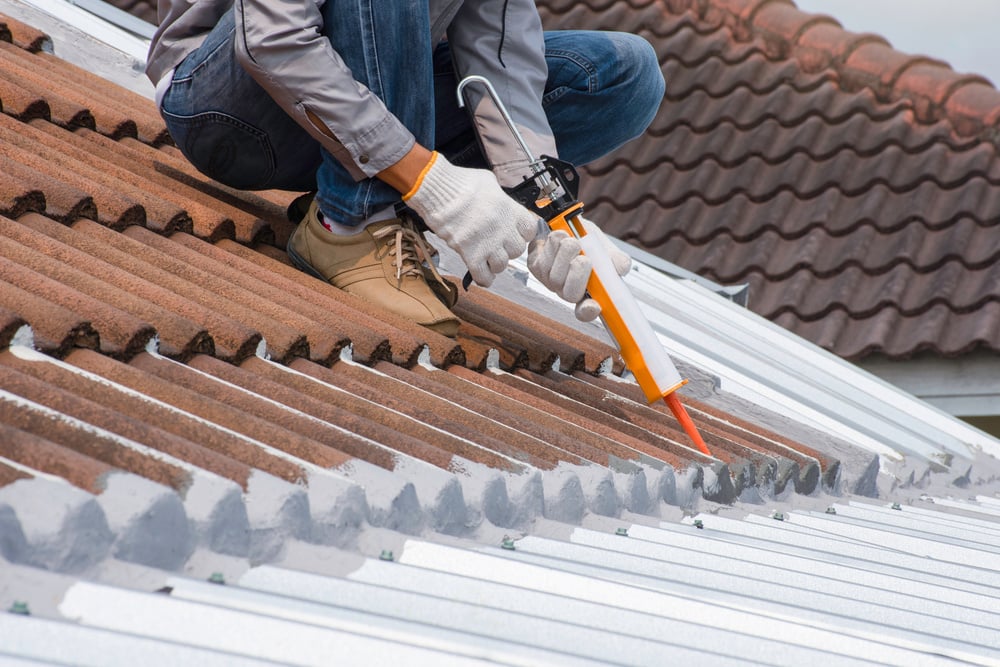
Roof tile adhesive is built primarily to bond — holding tiles firmly to the substrate or to each other.
Roof tile sealant is built primarily to seal — closing gaps and joints against water and air infiltration.
Roof Tile Adhesives vs. Roof Tile Sealants: |
|
|---|---|
|
Roof Tile Adhesive: |
Roof Tile Sealant: |
|
Bons roof tiles to the substrate |
Seals joins and gaps |
|
Prevents tile movement |
Prevents water intrusion |
|
Provides structural hold |
Provides weatherproofing |
|
Used during installation and repair |
Used around joints and flashing |
|
Many hybrid polymer products perform both functions |
Modern products often combine sealing and bonding |
In practice, contractors often use the terms "roof tile adhesive," "roof glue," and "roof tile sealant" interchangeably, because most modern hybrid-polymer formulas (like Seal Bond's) are engineered to do both jobs in a single product.
That dual function matters for your inventory strategy: distributors who stock a hybrid adhesive or sealant reduce the number of SKUs contractors need for a single job, simplifying purchasing and increasing basket size per order.
When Should You Use Roof Tile Adhesive?
Use roof tile adhesive when:
- Replacing damaged roof tiles
- Repairing loose tiles
- Installing ridge or hip tiles
- Securing tiles in high-wind areas
- Bonding concrete, clay, slate, or quarry roof tiles
Hybrid polymer adhesives are often preferred because they provide both bonding and weatherproof sealing in one application.
Say Hello to Seal Bond Sealants and Adhesives
Seal Bond manufactures hybrid polymer roof tile adhesives and sealants designed for commercial and residential roofing applications. The product line includes formulations for roof tile repair, high-wind installations, and environmentally conscious construction projects.
Seal Bond is ready to be your trusted partner for high-quality sealants and adhesives that guarantee performance and durability. Our products are designed to meet and exceed your expectations because your reputation depends on reliable materials.
With top-tier sealants, adhesives, and coatings that offer superior bond strength and long-lasting durability, Seal Bond ensures your projects stand the test of time. Plus, our 5-star customer service and one-on-one consultations make it easy to find the right solution, helping you deliver exceptional results every time.
Standout Features of Seal Bond Roof Tile Adhesives
Extensive Product Inventory — Seal Bond offers an extensive inventory of hundreds of products designed to meet the needs of any roofing or construction job.
Superior Bond Strength — Seal Bond's tile adhesives are engineered for exceptional adhesion, keeping roof tiles securely in place even under harsh weather conditions.
Versatility and Compatibility — Whether you're working with ceramic, concrete, or clay tiles, Seal Bond's adhesives handle a wide range of roofing materials.
Ease of Application — Fast cure times and minimal mess help reduce labor costs and increase job-site efficiency.
Weather Resistance — Built to withstand extreme heat and freezing temperatures without breaking down.
Which Seal Bond Roof Tile Adhesive Should You Stock?
Seal Bond is a leading manufacturer of hybrid polymer sealants and adhesives for commercial and residential roofing. Our product line features formulas specifically designed to bond to most roofing substrates and withstand even the most extreme climates.
Seal Bond Roofing Adhesives |
||
|---|---|---|
|
Product: |
Best For: |
Standout Feature: |
|
Repairing concrete, clay, quarry, and slate roof tiles |
Water- and weather-resistant seal on new and existing roofs |
|
|
Solar, roofing, and general construction jobs requiring code compliance |
Formulated approved for high-wind zones |
|
|
Interior and exterior bonding without primer |
Very low VOC, environmentally friendly formula |
|
Seal Bond® 440 Roof Tile Adhesive/Sealant
This high-performance roof adhesive was developed especially for repairing concrete, clay, quarry, and slate roof tiles on new and existing roofs. It bonds to most building materials, producing a water- and weather-resistant seal.
- Solvent and isocyanate-free
- Non-silicone, non-flammable
- Fast curing
- Permanently elastic in a broad temperature range
- Paint compatible, low odor, extremely low shrinkage
- Multiple colors available
Seal Bond® 500 High Strength Adhesive/Sealant
Seal Bond 500 is an extremely high-strength, one-component adhesive and sealant for solar, roofing, and construction. It's a low-odor, 100% solids formula for interior and exterior applications, and the one to reach for when a job requires high-quality certification.
- Solvent and isocyanate-free
- Non-silicone, non-flammable
- Fast curing, multiple colors available
- Permanently elastic in a broad temperature range
- Paint compatible, low odor, extremely low shrinkage
Seal Bond® 495 High-Performance Adhesive/Sealant
Seal Bond® 495 is a high-strength, one-component, elastomeric adhesive and sealant that permanently adheres to construction materials without primer, for both interior and exterior use. It's an environmentally friendly formula with no solvents or isocyanates and very low VOCs.
- Non-silicone, non-flammable
- Fast curing
- Permanently elastic in a broad temperature range
- Paint compatible, low odor, extremely low shrinkage
Frequently Asked Questions
What is roof tile adhesive used for?
Roof tile adhesive is used to bond concrete, clay, slate, quarry, and other roofing tiles to the roof deck or adjacent tiles. It helps prevent movement caused by wind, rain, temperature changes, and vibration while improving the overall durability of the roofing system.
What's the difference between roof glue and roof tile sealant?
Roof glue is generally used to bond tiles in place, while roof tile sealant is used to seal gaps and joints to prevent water intrusion. Many modern formulas, including Seal Bond's, perform both functions.
Is roofing glue the same as roof tile adhesive?
Yes. "Roofing glue" and "roof tile adhesive" are commonly used interchangeably in the trade to describe products that bond roof tiles to a substrate.
How do you apply roof tile adhesive correctly?
Apply to a clean, dry surface, following the manufacturer's bead size and coverage guidance, and allow the recommended cure time before exposing the roof to foot traffic or heavy weather.
How long does a quality roof tile adhesive or sealant last?
Formulas built with permanent elasticity and low shrinkage, like Seal Bond's roofing line, are designed to remain flexible and intact for the life of the roofing system rather than cracking or shrinking over time.
Do all Seal Bond roofing products need a primer?
No. Seal Bond 495, for example, is formulated to bond to most construction materials without a primer, simplifying application.
Can you use roof tile adhesive in cold weather?
Seal Bond's roofing adhesives are formulated to stay permanently elastic across a broad temperature range, but cold weather can still slow cure times and affect application. Check the technical data sheet (TDS) for the specific product's minimum application temperature before a cold-weather job, and store cartridges at room temperature until use.
How much roof tile adhesive do I need per square?
Coverage depends on the product, bead size, and tile profile, so exact quantities vary by job. Refer to the TDS for the specific Seal Bond product for coverage guidance, or contact Seal Bond directly for a project-specific estimate.
Can Roof Tile Adhesive Replace Mechanical Fasteners?
Roof tile adhesive is often used alongside mechanical fasteners, depending on local building codes, roof design, and manufacturer requirements. In many roofing systems, adhesives improve wind resistance and waterproofing, while fasteners provide additional structural attachment.
Always follow local code requirements and the roofing manufacturer's installation guidelines.
Is roof tile adhesive waterproof?
Most modern hybrid polymer roof tile adhesives are waterproof once cured. They resist rain, moisture, UV exposure, and temperature fluctuations, making them suitable for long-term roofing applications.
What surfaces does roof tile adhesive bond to?
Quality roof tile adhesives bond to:
- concrete
- clay
- slate
- quarry tile
- masonry
- metal
- wood
- many roofing substrates
Always verify compatibility using the product's technical data sheet.
Can roof tile adhesive be painted?
Many hybrid polymer roof tile adhesives, including several Seal Bond products, are paint compatible after curing.
How long does roof tile adhesive take to cure?
Most hybrid polymer roof tile adhesives begin skinning over within minutes, but complete cure time varies based on temperature, humidity, and bead thickness. Always follow the manufacturer's cure recommendations before exposing the roof to heavy loads or severe weather.
Is roof tile adhesive resistant to UV exposure?
Quality roof tile adhesives are formulated to resist UV degradation and remain permanently elastic, reducing cracking and shrinkage over time.
Take Your Inventory to the Next Level with Seal Bond Roof Tile Adhesives
Adding Seal Bond roof tile adhesive and sealant to your inventory is a strategic move that can significantly impact your business. Seal Bond's high-quality products are a must-have for any roofing and construction supply chain, with the potential to maximize sales, improve customer satisfaction, and give your branch a competitive edge.
Don't miss out on the opportunity to elevate your offerings. Contact Seal Bond today to learn more about our products, place an order, or request a free sample. Let us help you provide the best solutions for your customers and drive success for your branch.