Modern production environments require structural strength, flexibility, fast cure speeds, and long-term durability—all while supporting faster assembly processes and reducing production slowdowns.
That’s exactly why Seal Bond® 292K was developed.
Seal Bond® 292K is a next-generation industrial adhesive designed to deliver high-strength structural adhesive bonding while maintaining the flexibility and environmental resistance manufacturers need in demanding applications.
Whether you’re bonding metals, composites, fiberglass, plastics, or dissimilar substrates, SB 292K helps simplify assembly while improving long-term performance.
|
Quick Answer: What Is Seal Bond® 292K?
Seal Bond® 292K is a 2-component hybrid structural bonding adhesive that combines epoxy-like strength with the flexibility and environmental durability of modified silane (MS) technology. It is designed for industrial applications requiring strong adhesion, vibration resistance, fast cure speeds, and reliable long-term performance across multiple substrates. |
What Is a Structural Bonding Adhesive?
A structural bonding adhesive is an industrial adhesive designed to permanently bond materials together while withstanding vibration, movement, mechanical stress, and environmental exposure.
Structural adhesive bonding is commonly used in manufacturing, transportation, marine, and industrial assembly applications where traditional fasteners or welds may add weight, stress points, or assembly complexity.
Seal Bond® 292K was developed specifically for these demanding, high-performance environments.
Why Manufacturers Need Better Industrial Adhesives
Many traditional industrial adhesive systems force manufacturers into difficult tradeoffs:
- Strength vs. flexibility
- Fast cure vs. workability
- Structural integrity vs. vibration resistance
- Durability vs. production efficiency
Traditional rigid epoxies may provide strength, but often struggle with vibration, thermal expansion, or dynamic movement over time.
Seal Bond® 292K helps eliminate those compromises.
By combining the strength characteristics of epoxy with the flexibility of hybrid adhesive technology, SB 292K provides a more balanced solution for modern manufacturing and assembly environments.
Common Problems With Traditional Industrial Adhesives
Manufacturers often experience performance issues when adhesive systems cannot withstand movement, vibration, or environmental exposure over time.
Six common adhesive failure points include:
- Cracking under vibration
- Bond failure from thermal expansion
- Slow cure speeds creating production bottlenecks
- Shrinkage and read-through issues
- Poor adhesion across dissimilar substrates
- Environmental degradation from moisture or temperature swings
These issues can lead to:
- Increased rework
- Assembly inconsistencies
- Reduced throughput
- Product failures
- Higher labor costs
- Downtime during production
Seal Bond® 292K was developed to help manufacturers solve these challenges while maintaining both structural strength and flexibility.
Why Manufacturers Are Moving Toward Flexible Epoxy Adhesive Alternatives
Rigid adhesive systems can create long-term reliability issues in applications exposed to movement, vibration, or environmental stress.
That’s why many manufacturers are transitioning to flexible epoxy adhesives that offer both structural strength and elasticity.
Seal Bond® 292K Delivers:
- High tensile and shear strength
- Flexibility under movement and vibration
- Reduced brittleness
- Low-to-zero shrinkage
- Improved resistance to thermal cycling
The modified silane technology helps absorb shock and movement while maintaining bond integrity over time.
This makes SB 292K particularly valuable in applications where long-term durability and assembly reliability are critical.
Traditional Epoxy vs. Seal Bond® 292K Hybrid Adhesive
Not all industrial adhesive systems perform the same under demanding production conditions.
Comparing traditional epoxy systems to modern hybrid adhesive technology showcases why manufacturers are increasingly looking for more flexible, durable bonding solutions.
|
Feature |
Traditional Epoxy |
Seal Bond® 292K |
|
Flexibility |
Low |
High |
|
Vibration Resistance |
Moderate |
Excellent |
|
Cure Speed |
Moderate |
Fast |
|
Multi-Substrate Adhesion |
Limited |
Excellent |
|
Shrinkage |
Higher |
Low-to-Zero |
|
Environmental Resistance |
Moderate |
Excellent |
|
Structural Strength |
High |
High |
For manufacturers balancing structural performance, environmental durability, and production efficiency, Seal Bond® 292K offers a more versatile alternative to traditional rigid epoxy systems.
Why Manufacturers Choose 2-Component Adhesive Systems
Unlike single-component moisture-cure systems, 2-component adhesives offer more controlled, consistent curing performance.
Benefits of 2-component adhesive systems include:
- Faster strength development
- More consistent cure speeds
- Reduced dependence on ambient humidity
- Improved production predictability
- Better performance in thicker bond lines
Seal Bond® 292K combines these advantages with hybrid flexibility and structural bonding performance.
This helps manufacturers reduce cure inconsistencies while improving throughput and assembly efficiency in demanding production environments.
Key Features & Benefits of Seal Bond® 292K
Seal Bond® 292K was engineered to help manufacturers improve structural adhesive bonding performance while supporting faster production cycles, environmental durability, and long-term assembly reliability.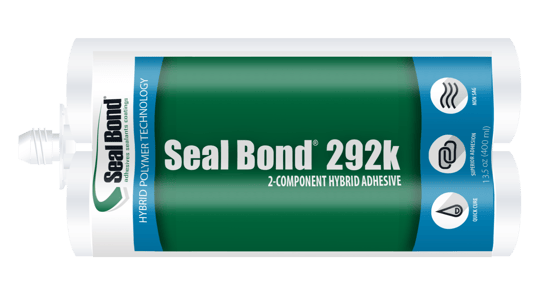
Superior Structural Adhesive Bonding Performance
Seal Bond® 292K is designed for high-strength structural bonding across a wide range of industrial substrates, including:
- Aluminum
- Stainless steel
- Cold-rolled steel
- Plastics
- Glass
- Fiberglass
- Wood
- Composites
This broad substrate compatibility helps manufacturers reduce assembly complexity and minimize the need for multiple adhesive systems.
Flexible & Shock-Resistant Performance
Unlike rigid adhesives that may crack under stress, SB 292K maintains flexibility while delivering strong structural performance.
This makes it ideal for applications exposed to:
- Vibration
- Dynamic movement
- Thermal expansion and contraction
- Impact stress
- NVH (noise, vibration, and harshness) challenges
Its flexibility also helps reduce read-through and shrinkage issues during assembly.
Fast Cure Speeds for Improved Production Efficiency
Production delays caused by slow-curing adhesives can impact throughput and assembly timelines.
Seal Bond® 292K is formulated for rapid strength development, helping manufacturers improve efficiency and reduce fixture times. The system sets in as little as 30 minutes and fully cures within 24 hours.
This helps manufacturers:
- Accelerate assembly workflows
- Reduce production bottlenecks
- Improve throughput
- Minimize handling delays
- Reduce rework risks
Excellent Environmental Resistance
Industrial adhesive systems must withstand challenging environmental conditions without degrading over time.
Seal Bond® 292K provides:
- Moisture resistance
- Weather resistance
- Temperature durability
- Long-term adhesion stability
- Indoor and outdoor performance capability
Plus, SB 292K is engineered to withstand both high and low temperature environments without degrading over time.
- The adhesive maintains performance across service temperatures ranging from -40°F to 250°F.
|
Looking for a Structural Bonding Adhesive for Your Application? Seal Bond® 292K is designed for demanding industrial environments that require flexibility, fast cure times, and durable structural performance. Request a free sample or speak with a Seal Bond expert about your application requirements. |
SB 292K Performance Snapshot:
Understanding adhesive performance specifications helps manufacturers evaluate whether an industrial adhesive system can meet the demands of their assembly environment.
|
Property |
Typical Value |
|
Working Time |
15–20 Minutes |
|
Tensile Strength |
930 psi |
|
Lap Shear |
683 psi |
|
Elongation |
40–50% |
|
Service Temperature |
-40°F to 250°F |
|
Cure Speed |
Sets in ~30 Minutes |
|
Formulation |
Non-Sag 2-Component Hybrid Adhesive |
Where Seal Bond® 292K Performs Best
Seal Bond® 292K is designed for demanding industrial and transportation applications requiring both strength and flexibility.
Trailer & Transportation Manufacturing
SB 292K helps absorb vibration and road shock while maintaining strong structural bonds across metal and composite assemblies.
Marine Applications
The adhesive provides long-term moisture and environmental resistance for demanding indoor and outdoor marine environments while helping absorb vibration and shock without compromising high-strength bond performance.
Composite Panel Bonding
SB 292K supports flexible structural bonding between dissimilar materials while helping reduce shrinkage and read-through.
Industrial Equipment Assembly
The system improves assembly durability in equipment exposed to vibration, movement, and thermal cycling.
Automotive & Vehicle Assembly
Fast cure speeds and flexible bonding performance help improve assembly efficiency and long-term reliability.
Common Applications for Seal Bond® 292K
Seal Bond® 292K is designed for demanding industrial and transportation applications requiring both strength and flexibility.
Common applications of SB 292K include:
- Trailer manufacturing
- Panel bonding
- Metal bonding
- Composite panel assembly
- Marine applications
- Vehicle assembly and body repair
- General industrial maintenance
- Sensitive assembly protection
When Should You Use a Structural Bonding Adhesive?
A structural bonding adhesive like SB 292K is often the ideal solution when applications require:
|
Application Challenge |
Why SB 292K Helps |
|
Dissimilar material bonding |
Adheres to multiple substrates |
|
Vibration & movement |
Maintains flexibility |
|
Fast production cycles |
Rapid strength build |
|
Outdoor exposure |
Excellent environmental resistance |
|
Structural assembly |
High tensile & shear strength |
|
Reduced read-through |
Low-to-zero shrinkage |
Designed for Modern Manufacturing Environments
Seal Bond® 292K supports modern production goals with:
- Low VOC formulation
- Solvent-free chemistry
- Non-sag application
- Automation compatibility
- Multiple packaging options
Packaging options include:
- 400ml dual cartridges
- 5-gallon pails
- 50-gallon drums
FAQ: Structural Adhesive Bonding
What is structural adhesive bonding?
Structural adhesive bonding is the process of permanently joining materials together using high-strength industrial adhesives designed to withstand stress, movement, vibration, and environmental exposure.
What materials can Seal Bond® 292K bond?
Seal Bond® 292K bonds to a wide range of substrates, including aluminum, stainless steel, cold-rolled steel, fiberglass, wood, and composites.
Is Seal Bond® 292K flexible after curing?
Yes, Seal Bond® 292K is flexible after curing. SB 292K is designed to maintain flexibility after curing while still providing strong tensile and shear performance.
How fast does Seal Bond® 292K cure?
Seal Bond® 292K sets in approximately 30 minutes and fully cures within 24 hours.
Can Seal Bond® 292K be used outdoors?
Yes. SB 292K offers excellent weather and moisture resistance for indoor and outdoor applications.
What makes hybrid adhesives different from traditional epoxies?
Hybrid adhesives combine the structural strength of epoxy systems with the flexibility, weather resistance, and movement capability of modified silane technologies.
Why do manufacturers use flexible epoxy adhesive alternatives?
Flexible epoxy adhesive alternatives help manufacturers improve durability in applications that are exposed to movement, vibration, impact, and thermal cycling.
Request a Free Sample of Seal Bond® 292K
Looking for a structural bonding adhesive that delivers strength, flexibility, and fast production performance?
Seal Bond® 292K helps manufacturers improve assembly reliability, reduce production challenges, and maintain long-term durability across demanding industrial applications.
Contact Seal Bond today to request a free sample or speak with a product expert about your application requirements.