
In garage door manufacturing, every component matters—but few influence long-term performance as much as the threshold seal.
This single element protects the door system from air infiltration, water intrusion, thermal expansion and contraction, and everyday wear.
When the wrong sealant is used at the threshold, the results are evident: callbacks, compromised energy efficiency, premature failures, and dissatisfied customers.
That’s why more manufacturers are turning to hybrid polymer sealants that provide strong, flexible, and long-lasting bonds across the wide range of materials used in modern garage door designs.
In this blog, we’ll break down why threshold sealants are so essential, the most common challenges manufacturers face, and how advanced hybrid polymer technologies can help improve product quality, consistency, and long-term durability.
Ready to upgrade your garage door performance from the ground up? Let’s dive in.
The Role of Threshold Sealants in Garage Door Design
Threshold sealants aren’t just a finishing detail—they’re a core part of how a garage door performs in the field.
Here’s why they matter:
Keeps Air and Water Out
- The bottom of the door is the first place where air and moisture try to enter.
- A strong threshold seal prevents drafts, leaks, and energy loss, helping manufacturers deliver a better, more reliable product.
Protects the Door From Long-Term Wear
- A good sealant reinforces the connection between the panel, bottom rail, and threshold.
- This helps reduce vibration issues, prevents material separation, and supports smoother door operation over time.
Handles Temperature Changes Without Failing
- Garage doors go through constant expansion and contraction.
- If a sealant becomes brittle or cracks, the threshold fails. Flexible, high-performance sealants maintain their bond through heat, cold, and humidity—keeping the door sealed year-round.
The 4 Biggest Challenges in Garage Door Assembly
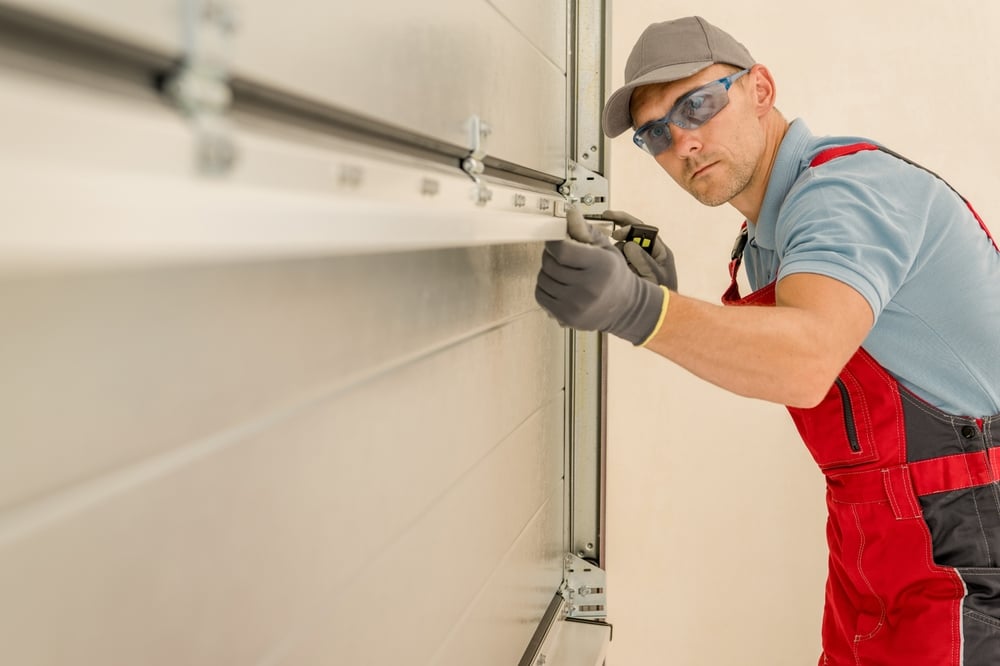
Garage door manufacturers deal with several common pain points during assembly—especially at the threshold. The proper sealant can solve many of them upfront.
1. Bonding Dissimilar Materials
Modern garage doors combine metal, composites, plastics, and glass.
- The challenge: many traditional sealants don’t bond well across mixed substrates.
- The result: weak points that lead to failures in the field.
2. Preventing Cracks, Shrinkage, and Seal Failure
Extreme temperatures, humidity, and constant door cycling can break down lower-grade sealants.
- Once the threshold seal cracks, water infiltration and structural issues follow.
3. Keeping Production Fast and Consistent
Manufacturers need sealants that are easy to apply, cure predictably, and support efficient throughput.
- Slow curing or complex application adds time, labor, and variability to the production line.
4. Meeting Modern EHS Requirements
ISO and corporate safety standards are prompting many manufacturers to move away from high-VOC or isocyanate-based products.
- The challenge: finding a safer sealant that still performs at a high level.
The Solution: Hybrid Polymer Sealants Are the New Standard
Hybrid polymer technology has quickly become the preferred choice for garage door manufacturers—and for good reason. These sealants are specifically engineered to address the unique challenges encountered in threshold applications.
Their standout features include:
- Primerless adhesion to metal, composites, plastics, and glass without primers or extra prep.
- Flexible, weatherproof performance to stay elastic through heat, cold, moisture, and UV exposure.
- Built-in movement capability to flex with the door’s expansion and contraction, keeping the seal intact year-round.
- Low-VOC, isocyanate-free formulations to meet modern safety and environmental requirements.
Introducing: Seal Bond Solutions for Garage Door Threshold Sealing
Seal Bond’s hybrid polymer adhesives and sealants are engineered specifically for the demands of garage door manufacturing. They help improve throughput, reduce field failures, and deliver long-term performance right at the threshold.
Below is a quick comparison of Seal Bond’s most popular products for garage door threshold applications.
|
Product |
Best For |
Key Benefits |
|
Flexible threshold sealing |
• Strong adhesion to metals & composites • Excellent movement capability • Reliable barrier against air & water |
|
|
Structural bonding at the threshold |
• Primerless adhesion across mixed substrates • Fast, consistent cure • Supports high-strength assemblies |
|
|
All-in-one sealing + bonding |
• Combines strength and flexibility • Streamlines assembly steps • Performs in extreme weather |
|
|
Applications requiring adjustability |
• Longer working time • Strong, flexible bond after cure • Ideal for complex alignment needs |
|
|
Smooth, uniform threshold joints |
• Self-leveling for consistent results • Supports automated processes • Durable in long-term exposure |
How Seal Bond Supports Garage Door Manufacturers
Garage door manufacturers choose Seal Bond because our hybrid polymer technology is specifically designed to address real-world production challenges. Whether you’re responsible for operations, engineering, or quality, our products help you build stronger, longer-lasting doors with fewer bottlenecks on the line.
What This Means for Your Team
For Operations Managers:
- Faster, cleaner production with primerless adhesion
- Predictable cure times that keep schedules on track
- Low-VOC, isocyanate-free options that support a safer workplace
For Product Engineers:
- Reliable performance across metals, composites, glass, and plastics
- High-strength bonds that support modern garage door design
- Flexible formulations that withstand temperature swings and movement
For Quality Managers:
- Fewer field failures and warranty claims
- Sealants that stay flexible instead of cracking under stress
- Consistent, repeatable results across every production run
For Manufacturing Engineers:
- Materials that streamline assembly and reduce rework
- Sealants designed for automated or semi-automated processes
- Advanced hybrid polymer technology proven to enhance throughput
Seal Bond's formulations are designed to last—so every door you build performs the way your customers expect.
Stronger Thresholds Start With Better Sealants
Are you ready to enhance your threshold sealing process, minimize failures, and optimize assembly? Connect with Seal Bond for product guidance or to request a sample.