VOC compliance isn’t optional anymore—it’s part of doing business in modern construction.
Across commercial, residential, and industrial projects, there are stricter VOC limits than ever before. Regional regulations now influence which adhesives you can use, how projects are inspected, and whether your bid even gets accepted.
And when a product doesn’t meet those standards? Delays, failed inspections, and added costs follow.
That’s why construction professionals are shifting toward low-VOC and solvent-free adhesives that deliver reliable performance without creating compliance risk. Hybrid polymer technology offers a way to meet strict emission limits while still achieving the strength, flexibility, and durability your projects demand.
In this blog, we’ll break down today’s VOC regulatory landscape, what’s at stake for contractors and distributors, and how low-VOC adhesive solutions help you stay compliant, competitive, and confident on every job.
What VOC Regulations Apply to Construction Adhesives Today?
VOC rules vary by location, so compliance can get complicated. Construction teams now work within a mix of federal, state, regional, and specification-level requirements, all of which influence adhesive selection long before a project begins.
Below is a clear breakdown of the major standards impacting today’s job sites:
EPA Clean Air Act (CAA)
The EPA sets nationwide limits on volatile organic compound emissions to reduce smog-forming pollutants. These rules apply broadly to building materials and establish the baseline most manufacturers must meet.
CARB (California Air Resources Board)
CARB governs some of the strictest VOC limits in the country. Even if you don’t operate in California, many national brands adhere to CARB standards because it ensures broader compliance and avoids region-specific SKUs.
SCAQMD Rule 1168
Often considered the strictest VOC regulation in the U.S., Rule 1168 sets tight limits on architectural adhesives, roofing adhesives, sealants, and primers. Many specifiers now default to “1168-compliant products only” to reduce project risk.
OTC (Ozone Transport Commission)
OTC regions (covering much of the Northeast and Mid-Atlantic) enforce VOC limits that align closely with CARB. Distributors serving multi-state territories pay special attention to these thresholds to avoid stocking non-compliant materials.
LEED, WELL, and GreenGuard
These voluntary building standards influence the selection of adhesives for commercial, healthcare, institutional, and government projects. Architects and specifiers increasingly require:
- Documented VOC content (g/L)
- Verification from the SDS/TDS
- Proof of low-emission formulas
Why This Matters for Your Team:
More projects now require adhesives that meet these standards. If your products don’t check the box early in the submittal process, you risk delays, redesigns, or outright rejection — long before installation begins.
What Happens When Adhesives Don’t Meet VOC Limits?
For builders, distributors, and specifiers, VOC non-compliance isn’t just a paperwork issue—it directly impacts timelines, budgets, and project approvals. When an adhesive doesn’t meet federal, state, or regional VOC limits, the consequences can show up fast.
7 Real Risks of Using Non-Compliant Adhesives:
1. Failed Inspections
Inspectors routinely verify product labels, SDS/TDS data, and VOC content in grams per liter (g/L). If the adhesive doesn’t meet the required standard, the installation stops and corrective work starts.
2. Project Delays
Rework, product replacement, and resubmittals add days or weeks to a schedule. This risk is especially costly on commercial projects with tight occupancy timelines.
3. Penalties or Fines
Regions governed by CARB or SCAQMD 1168 can issue citations for using high-VOC materials, especially in sensitive or occupied environments.
4. Rejected Bids and Submittals
Specifiers are increasingly screening materials for VOC compliance before awarding contracts. Using the wrong adhesive can cost teams the job before it even begins.
5. Worker Safety and OSHA Concerns
High-VOC formulas increase exposure risks, particularly in indoor or low-ventilation spaces. This can trigger additional personal protective equipment (PPE) requirements and safety compliance checks.
6. Warranty and Manufacturer Issues
Some warranties require compliant products to be valid. Using a high-VOC adhesive may void coverage or limit manufacturer support.
7. Damage to Reputation
One failed inspection can create lasting doubt with architects, GCs, and facility owners — especially in markets that prioritize indoor air quality (IAQ) and sustainability.
Why Are Low-VOC & Solvent-Free Adhesives Becoming the Specification Standard?
Low-VOC and solvent-free adhesives aren’t just a “green” preference anymore. They’re quickly becoming the default specification across commercial, residential, institutional, and government projects.
Why More Specs Require Low-VOC Products:
Bid Documents Now Call for Them
More RFPs, submittals, and architectural drawings explicitly require:
- SCAQMD 1168 compliance
- CARB-compliant formulations
- Low-emitting materials verified with SDS/TDS data
Teams that don’t meet these requirements often don’t make it past the first review.
Government & Institutional Projects Mandate Them
Public facilities, schools, hospitals, and government buildings typically use strict IAQ and emissions criteria. Low-VOC and solvent-free adhesives eliminate an entire category of compliance risk.
Lower Liability for GCs, Architects & Contractors
Choosing low-VOC solutions reduces the chance of:
- Failed inspections
- IAQ complaints
- Worker exposure issues
- Rework related to non-compliant materials
Less risk means smoother projects.
Easier Documentation for Submittals
Hybrid polymer adhesives (like many in the Seal Bond lineup) have clear VOC data and straightforward SDS/TDS documentation. This speeds up approvals and supports LEED, WELL, and GreenGuard applications.
Facility Managers Demand Better IAQ
Owners and operators are increasingly requesting low-emission materials to avoid occupant complaints, IAQ issues, and future remediation costs.
Introducing Hybrid Polymer Technology: Meeting Performance Standards and VOC Regulations
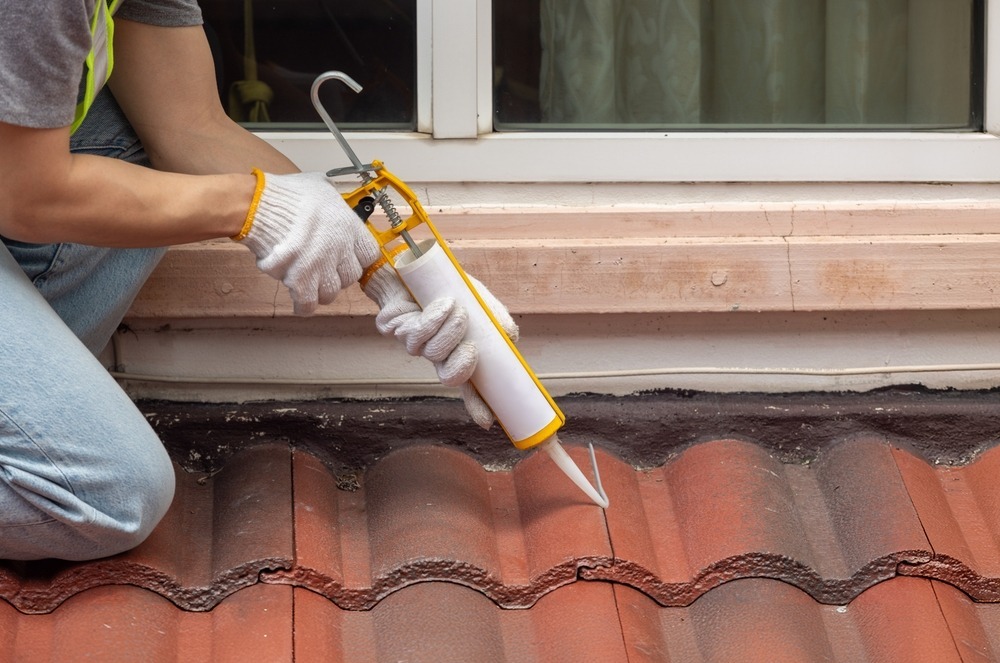
Traditional solvent-based adhesives make VOC compliance difficult. Hybrid polymer technology changes that. By eliminating high-solvent formulations and using advanced polymer chemistry, hybrid polymer adhesives deliver the performance construction professionals expect while meeting even the strictest VOC limits.
5 Reasons Why Hybrid Polymer Adhesives Are Ideal for Compliance-Driven Projects:
1. Naturally Low-VOC, Solvent-Free Chemistry
Hybrid polymers contain no solvents, no isocyanates, and extremely low VOC levels. That means they align with:
- EPA requirements
- CARB standards
- SCAQMD Rule 1168
- OTC limits
- LEED and WELL criteria
All without reformulating or adjusting installation processes.
2. Low Odor for Occupied or Tight-Ventilation Job Sites
Hospitals, schools, retail spaces, and multi-family buildings often require adhesives that won’t disrupt occupants. Hybrid polymers minimize odor and reduce the need for special ventilation requirements.
3. High Bond Strength Across Multiple Materials
Hybrid polymer chemistry bonds well to:
- Metal
- Concrete
- Wood
- TPO/PVC/EPDM
- Composites
- Masonry
- Roofing substrates
This reduces the need for multiple SKUs and simplifies compliance audits.
4. Stability Without Solvent Shrinkage or Cracking
Solvent-based adhesives can shrink, crack, or lose profile as they cure. Hybrid polymer adhesives cure elastically with:
- Strong initial tack
- Long-term flexibility
- UV/weather resistance
Ideal for building roofing and structural applications where failure isn’t an option.
5. Performance That Meets (and Often Exceeds) Industry Expectations
Because hybrid polymers avoid solvents and isocyanates, they meet strict VOC rules without sacrificing mechanical performance, making them a reliable choice for both new construction and retrofit work.
Seal Bond’s Low-VOC & Solvent-Free Adhesive Solutions for Compliant Construction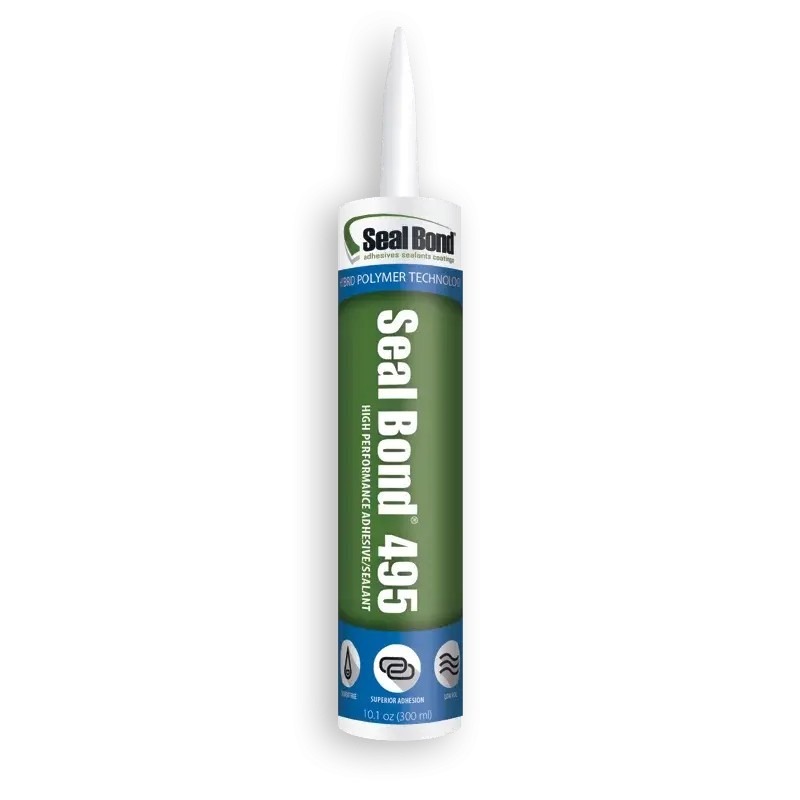
Not all “low-VOC” products are created equal. Seal Bond’s hybrid polymer adhesives are engineered specifically to help contractors, distributors, and specifiers meet the strictest federal, state, and regional VOC requirements without compromising performance, durability, or workflow.
Seal Bond Low-VOC Adhesives & Sealants — Compliance Snapshot |
|||
|
Product |
VOC Profile |
Key Standards Met |
Common Applications |
|
Low-VOC, solvent-free |
EPA, CARB, OTC |
General construction bonding, roofing, interior/exterior sealing |
|
|
Low-VOC hybrid polymer |
SCAQMD 1168, CARB |
Roof tile bonding, high-wind & high-heat environments |
|
|
Zero-solvent, low-odor |
LEED/WELL-supportive, SCAQMD |
Flashing, building envelope waterproofing, window/door perimeters |
|
|
Extremely low VOC |
EPA, CARB |
Industrial, marine, transportation, multi-material bonding |
|
|
Low-VOC hybrid polymer |
SCAQMD 1168, CARB, OTC |
High-strength structural bonding, roofing, and transportation |
|
How Can Contractors, Distributors & Specifiers Confirm VOC Compliance?
VOC compliance varies by region, adhesive category, and project type—which is why construction teams need a straightforward way to verify whether a product meets the right standard before installation.
The FAQs below address the most common compliance questions the Seal Bond team hears from architects, builders, and distributors.
Compliance FAQ for Construction Pros:
Q. What VOC standards should I be aware of in my region?
A. Start with your state or regional requirements. Areas under CARB, OTC, or SCAQMD Rule 1168 typically have the strictest limits. If you're uncertain, default to products that clearly document compliance with all three.
Q. Does SCAQMD Rule 1168 apply to my project?
A. If your project is in Southern California, the answer is yes.
However, many architects outside the region still require 1168-compliant materials because they reduce risk and simplify IAQ documentation.
Q. How do I know if an adhesive meets LEED or WELL criteria?
A. Check the product’s VOC content (g/L) on the SDS or TDS. LEED and WELL both require low-emitting adhesives verified with transparent VOC documentation.
Q. Are solvent-free adhesives automatically low-VOC?
A. Not always. But most solvent-free hybrid polymer formulas (including Seal Bond’s) are naturally low-VOC. Always verify VOC g/L to be sure.
Q. Do inspectors actually check VOC content?
A. Yes. Inspectors may:
- Reference your SDS/TDS
- Verify VOC g/L
- Validate the adhesive category (roofing vs. sealant vs. construction)
- Confirm materials match approved submittals
✔ Quick Compliance Checklist for Construction Teams:
A simple, repeatable process:
✔ Review VOC content (g/L) on the TDS/SDS
✔ Identify which standard the product meets (CARB, SCAQMD, OTC, EPA, LEED/WELL)
✔ Confirm the product category (roofing adhesive, architectural sealant, flooring adhesive, etc.)
✔ Request compliance documentation when bidding
✔ Avoid field substitutions — ensure the SKU used matches the approved submittal
✔ When in doubt, choose a hybrid polymer, solvent-free formula
✔ This checklist reduces risk for GCs, architects, distributors, and specifiers across all project types.
Build Compliantly. Build Confidently. Build With Seal Bond.
VOC regulations are tightening, and they’ll continue to evolve.
Seal Bond’s hybrid polymer technology gives construction professionals a reliable way to stay ahead of regulations without sacrificing strength, versatility, or durability.
Need help verifying VOC requirements or selecting the right product?
Seal Bond’s team can provide SDS/TDS documentation, compliance guidance, and recommendations tailored to your project.
Contact us to build with confidence, compliance, and long-term performance.