Waterproof roofing sealants are flexible materials used to seal flashing, penetrations, and joints to prevent roof leaks and water intrusion.
Even the best-built roofs can develop leaks if critical joints, penetrations, and transitions are not properly sealed.
Waterproof roofing sealants play a critical role in protecting roofing systems from moisture intrusion, UV exposure, and long-term structural damage. When the wrong sealant is used—or when sealants fail prematurely—the result can be leaks, mold growth, corrosion, and costly repairs.
For roofing contractors, distributors, and construction professionals, choosing the right waterproof sealant ensures long-term durability and reliable protection against harsh environmental conditions.
In this guide, we’ll explain:
- What waterproof sealants for roofing are
- Why selecting the right sealant matters
- Where waterproof sealants are used on roofing systems
- The best Seal Bond waterproof sealants for roofing applications
What Is a Waterproof Sealant for Roofing?
A waterproof roofing sealant is a flexible material used to seal roof joints, penetrations, and flashing to prevent water intrusion.
High-performance roofing sealants must provide:
- Strong adhesion to roofing substrates
- Flexibility during thermal expansion and contraction
- Resistance to UV exposure and harsh weather conditions
- Long-term protection against moisture infiltration
Waterproof sealants are commonly used across roofing systems to protect critical transition points and maintain the structural integrity of buildings.
Key Takeaway:
The most effective waterproof roofing sealants must provide strong adhesion, long-term flexibility, and resistance to UV exposure and weather.
Why Choosing the Right Waterproof Sealant for Roofing Matters
A high-performance waterproof sealant helps roofing systems maintain structural integrity even under extreme environmental conditions.
Without proper sealants, roofing systems are vulnerable to:
- Water intrusion
- Mold growth
- Corrosion
- Structural damage
When selecting roofing sealants, construction professionals often face several challenges, including the following:
Durability:
Not all sealants provide long-term protection. Some products can crack, shrink, or lose adhesion after extended exposure to weather and UV radiation.
Ease of Application:
Large-scale roofing projects require sealants that apply easily and cure reliably. Difficult-to-apply products can slow down installation and increase labor costs.
Long-Term Value:
Contractors and distributors need sealants that balance performance, durability, and cost-effectiveness.
The Seal Bond Solution: High-Performance Roofing Sealants
Seal Bond addresses these challenges with high-performance hybrid polymer adhesives and sealants engineered for demanding construction environments.
Seal Bond roofing sealants deliver:
- Strong adhesion to multiple roofing substrates
- Excellent flexibility under movement and temperature changes
- Long-lasting UV and weather resistance
- Easy application and fast curing
These features help roofing professionals complete projects efficiently while ensuring long-term waterproof protection.
Where Waterproof Roofing Sealants Are Most Commonly Used
Waterproof sealants protect the most vulnerable areas of roofing systems. While large roofing surfaces provide the primary barrier against the elements, leaks most often occur at transitions, penetrations, and material joints.
Roof Flashing
Flashing seals joints where roofing materials meet vertical surfaces such as walls, chimneys, and skylights. These transition points experience constant movement and exposure to weather.
High-performance sealants help maintain a flexible, watertight barrier that prevents water from entering the building envelope.
Roof Penetrations
Pipes, vents, electrical conduits, and mounting brackets create openings in roofing systems that must be sealed properly.
Sealants are commonly used to protect areas around:
- Plumbing vents
- HVAC penetrations
- Solar mounting brackets
- Satellite mounts
- Electrical conduit penetrations
Flexible sealants allow roofing materials to expand and contract without breaking the waterproof seal.
Metal Roof Seams
Metal roofing systems expand and contract significantly due to temperature changes.
Sealants used on metal roofs must remain flexible while maintaining strong adhesion to prevent seam failure and water intrusion.
Equipment Curbs and Rooftop Units
Large rooftop equipment, such as HVAC systems, requires properly sealed curbs to prevent water intrusion.
Solutions like the Seal Bond® FLEXCURB™ Universal Curb Kit allow contractors to quickly create durable waterproof seals around roof penetrations.
Roof Tile and Shingle Repairs
Waterproof sealants are often used to repair or secure roofing materials such as:
- Clay tiles
- Concrete tiles
- Slate tiles
- Asphalt shingles
Strong bonding helps keep materials securely in place while preventing water infiltration beneath the roofing surface.
Bottom Line:
Most roof leaks occur at flashing, penetrations, and roof transitions—not across large roof surfaces.
The Top Waterproof Sealants for Roofing from Seal Bond
Hybrid polymer sealants are widely used in roofing applications because they combine strong adhesion with long-term flexibility and weather resistance.
Seal Bond offers several high-performance waterproof sealants engineered to meet the demanding requirements of roofing professionals.
Seal Bond® 400 Universal Adhesive/Sealant
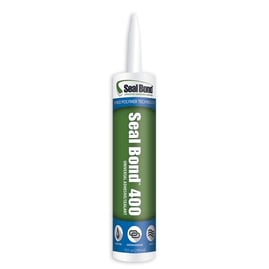
Seal Bond® 400 Universal Adhesive/Sealant is a single-component, moisture-curing hybrid polymer sealant designed for demanding roofing and construction applications. Engineered for durability and flexibility, SB 400 creates reliable seals across a wide range of substrates while maintaining performance in harsh weather conditions.
Features:
- Excellent UV and weather resistance
- Non-sag performance for vertical or overhead applications
- Permanently elastic across a wide temperature range
Benefits:
Long-lasting protection | Seal Bond® 400 forms durable, weather-resistant seals that help prevent water intrusion and extend the lifespan of roofing systems.
Easy application | The smooth gunability and non-sag formulation allow contractors to apply the sealant quickly and precisely—even on vertical or overhead surfaces.
Reduced roof maintenance | SB 400 remains flexible from -40°F to 190°F, helping maintain adhesion through temperature swings, UV exposure, and building movement.
Seal Bond® FLEXCURB™ Universal Curb Kit
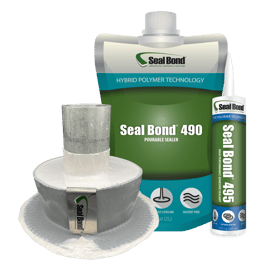
The FLEXCURB™ Universal Curb Kit replaces traditional plastic or metal pitch pans and provides a fast, reliable solution for roof penetration sealing.
Features:
- Versatile installation
- High flexibility
- Weather resistance
Benefits:
Reliable waterproof protection | The FLEXCURB™ system helps prevent leaks at roof penetrations and equipment mounts.
Fast installation | The kit installs in under 10 minutes, saving time on the job site.
Seal Bond® 500 High Strength Adhesive/Sealant
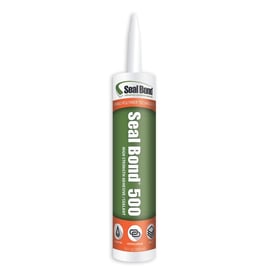
Seal Bond® 500 is an extremely high-strength adhesive and sealant used by roofing, solar, and construction professionals.
Features:
- Exceptional bond strength
- Fully waterproof
- Flexible formulation
Benefits:
Performs under extreme conditions | Seal Bond® 500 maintains adhesion during heavy rain, high winds, and extreme temperatures.
Prevents water damage | The sealant creates a durable waterproof barrier protecting roofing systems from moisture intrusion.
Compatible with multiple materials | Seal Bond® 500 bonds to concrete, metal, wood, and many other construction substrates.
Best Waterproof Sealants for Different Roofing Materials
Different roofing materials require sealants that can bond effectively while maintaining flexibility and long-term waterproof performance.
Metal Roofs
Metal roofs undergo significant expansion and contraction with temperature changes. Sealants used on metal roofing must remain flexible while maintaining strong adhesion.
Seal Bond® 500 provides strong adhesion to aluminum, galvanized steel, and coated metal roofing systems.
Asphalt Shingles
Asphalt shingle roofs rely on sealants to secure flashing and repair vulnerable areas.
Seal Bond® 400 Universal Adhesive/Sealant provides strong bonding to many roofing materials used in shingle systems.
Roof Tiles (Clay, Concrete, and Slate)
Tile roofing systems require sealants that can bond securely while accommodating movement caused by temperature changes.
Seal Bond® 440 is designed specifically for tile repair and bonding applications.
Single-Ply Roofing Membranes
Single-ply systems such as TPO and PVC require sealants that bond without damaging membrane materials.
Seal Bond hybrid polymer sealants provide strong adhesion across many membrane-compatible substrates.
Modified Bitumen Roofing
Modified bitumen roofing systems require sealants that bond effectively to SBS-modified asphalt surfaces.
Seal Bond sealants provide reliable adhesion across many modified bitumen systems.
Note: The best waterproof roofing sealant depends on the roofing material, environmental exposure, and roof movement.
An Overview of Seal Bond’s Leading Waterproof Roofing Sealants
|
Seal Bond Product Name |
Substrate Compatibility |
Color Options |
Noteworthy Features |
|
Seal Bond® 435 Multi-Purpose Sealant |
• Asphalt Shingles • SBS ModBit and Single ply substrates • Roof Tiles • Masonry • EPS Foam Insulation • Kynar® PVDF • Aluminum & Galvanized Metal |
• White • Black • Aluminum Gray • Limestone • Tan • Medium Bronze • Dark Bronze |
• Solvent and Isocyanate free • Non-silicone • Non-flammable • Fast-curing • Primerless bonding to most surfaces • Paint compatible • Low odor • Non-staining • Integrated nozzle cartridge |
|
Seal Bond® FLEXCURB™ Universal Curb Kit |
• Modified Bitumenlated - Granulated • PVC • Concrete • Metal • Asphalt Membranes • TPO • Coal Tar B.U.R |
• Grey |
• Kit can accommodate a wide range of penetration sizes and shapes. • Sold as (1) kit and (1) sku containing everything needed to seal multiple-sized roof penetrations • Installs in less than 10 minutes • Extra components can be easily stored and reused |
|
Seal Bond® 500 High Strength Adhesive/Sealant |
• Aluminum • Cold Rolled Steel • Coated Metal • Concrete • Glass • Block and Brick • Wood • Ceramics • EPS Foam • Fiberglass • SBS Mod Bit. • Primed TPO • EIFS • Many Plastics • Stainless Steel |
• White • Gray • Black • Tan • Limestone • Dark Bronze |
• No shrinkage • Fast skin over & low dirt pickup • Easily gunnable between 40° F and 100° F • Ultra-low VOCs, 23.9 g/L • SB-500 can be installed on damp surfaces • Low to no odor • Paintable after 24 hours • Integrated nozzle cartridge |
Why Roofing Professionals Choose Seal Bond
Seal Bond waterproof sealants offer several advantages over standard sealants.
Seal Bond formulations offer:
- Primerless adhesion to many substrates
- Long-term flexibility
- Resistance to UV exposure and harsh weather
- Easy installation and fast curing
For roofing professionals and distributors, these features help ensure more reliable installations and longer-lasting roofing systems.
Request a Free Sample of Seal Bond Waterproof Roofing Sealants
If you're looking for professional-grade waterproof sealants for roofing applications, Seal Bond offers high-performance solutions designed to withstand demanding environmental conditions.
Contact Seal Bond today or request a free sample to see how our adhesives and sealants can improve durability and performance on your next roofing project.
Frequently Asked Questions:
What is the best waterproof sealant for roofing?
The best waterproof sealant for roofing is one that provides:
- Strong adhesion
- Flexibility during roof movement
- UV and weather resistance
Can waterproof sealant stop roof leaks?
Yes. Waterproof roofing sealants are commonly used to seal flashing, penetrations, joints, and small cracks that allow water to enter roofing systems.
What surfaces can roofing sealants bond to?
Professional roofing sealants can bond to materials such as metal, concrete, masonry, roof tiles, asphalt shingles, and many roofing membranes.